
Forklift Ramp Slope Guidelines For Industrial Use
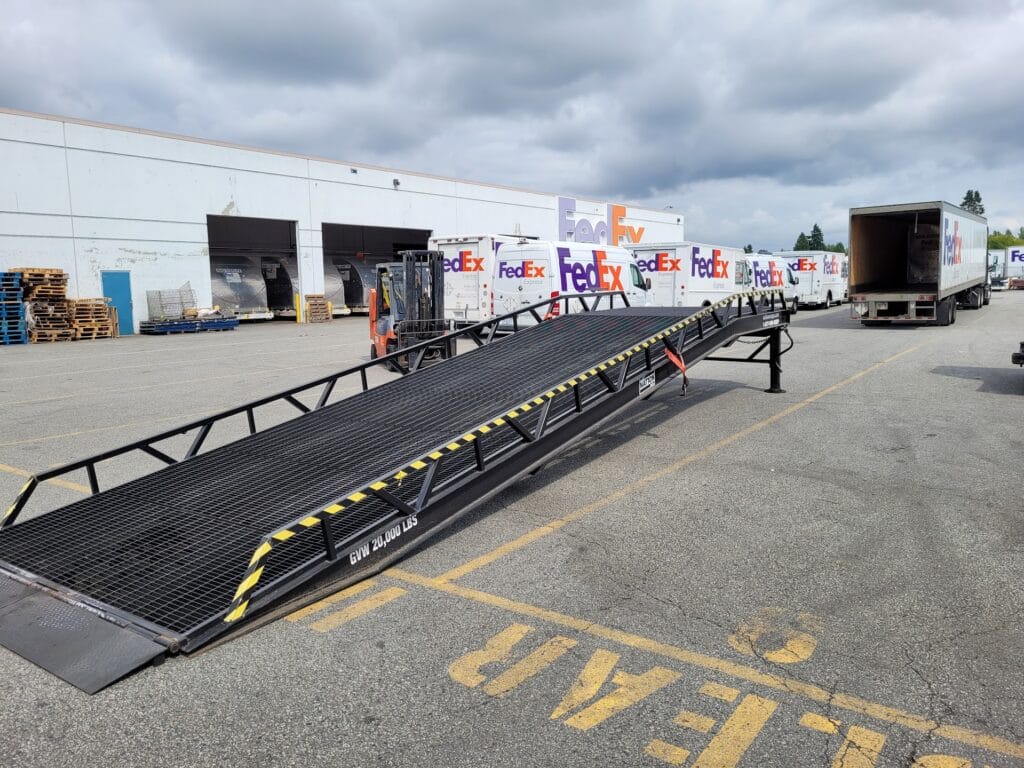
When planning industrial loading operations, determining the proper forklift ramp slope is one of the main things that influences safety and efficiency. The angle of a ramp affects how forklifts and other machinery traverse between ground level and dock heights.
Selecting the correct slope minimizes the effort required for operators, reduces wear on equipment, and helps maintain consistent material handling workflows.
Industrial facilities face unique challenges, making it necessary to design ramps that accommodate both equipment and load characteristics while complying with operational guidelines.
What is Forklift Ramp Slope?
The forklift ramp slope refers to the vertical rise of the ramp compared to its horizontal run. Expressed as a ratio or percentage, it indicates how steep the ramp is. A steep ramp demands more power from forklifts, increases the risk of tipping, and can reduce operational speed.
Shallow ramps occupy more floor space but create easier access for equipment. Recognizing the right slope is important for both temporary and permanent installations. Operators benefit from consistent gradients that match the machinery used in daily operations.
What Affects Ramp Design?
Designing the correct forklift ramp slope involves considering several variables. Load weight and size have a direct impact on ramp selection. Heavier machinery requires more gradual inclines to avoid strain and accidents.
Ground conditions also influence the slope; uneven or soft surfaces may necessitate additional support or modifications.
The type of forklift or equipment used determines the maximum manageable incline. Facility layout and available floor space must be considered to balance slope requirements with operational efficiency.
These rules guide industrial managers in selecting a ramp that supports both performance and safety.
Industry Guidelines for Industrial Ramps
Industry standards suggest recommended ratios for forklift ramp slope to maintain safe operations. A common guideline is a slope ratio of 1:12, where every inch of rise corresponds to 12 inches of horizontal run. This gradient is suitable for most standard forklifts and material handling vehicles.
In cases of light-duty equipment or temporary ramps, steeper slopes up to 1:8 may be used safely. Following these recommendations reduces operator fatigue and maintains equipment integrity. Compliance with established guidelines also minimizes the risk of accidents and operational delays.
Portable Loading Ramps for Flexible Use
Portable loading ramps are perfect for facilities requiring temporary or mobile access solutions. These ramps can be relocated to different locations within a warehouse or across multiple facilities.
Adjustable portable ramps allow for slight modifications to the slope, accommodating different forklifts and cargo types.
They are a practical choice for operations that experience fluctuating load requirements or need temporary access solutions. Portability reduces downtime and supports operational flexibility, making them a valuable option in industrial environments.
Equipment Loading Ramps for Heavy Machinery
Operations that handle heavy forklifts or specialized machinery often rely on equipment loading ramps. These ramps are constructed to support considerable weight and frequent use. A correctly calculated slope minimizes mechanical strain and reduces the risk of tipping.
Reinforced surfaces and strong frames allow equipment to move safely between ground level and dock height. Equipment loading ramps are suited for manufacturing plants, distribution centers, and construction sites where heavy-duty vehicles are in constant operation.
Proper slope selection directly influences operational safety and efficiency.
Ground to Dock Ramps for Daily Operations
Ground to dock ramps create a smooth transition between vehicles and dock levels. They are common in warehouses, shipping centers, and industrial facilities where forklifts frequently load and unload materials. The slope of these ramps affects operator effort and cargo stability.
Gradual slopes reduce stress on forklifts and allow for faster loading cycles. Accurate measurement of dock height and surrounding space is necessary to maintain a manageable slope.
These ramps contribute to operational consistency, reducing the likelihood of equipment damage or workplace injuries.
Custom Loading Ramps for Unique Applications
Some facilities require custom loading ramps to meet specific layout or operational needs. Custom ramps can accommodate irregular dock heights, tight spaces, or specialized machinery. Customized solutions consider slope, width, and surface texture to optimize safety and efficiency.
Facilities with high variability in load size or equipment type benefit from ramps engineered to match exact specifications. Custom designs allow warehouses and industrial facilities to maximize operational efficiency without compromising safety.
Expert consultation helps make certain ramps meet all requirements while maintaining safe gradients.
Calculating Forklift Ramp Slope
Calculating the correct forklift ramp slope begins with measuring the vertical distance between the dock and ground. The horizontal length available for the ramp is also important. Dividing rise by run produces a ratio that indicates the ramp angle.
Things like forklift type, load weight, and usage frequency influence the final slope selection. Temporary ramps may tolerate steeper slopes, while permanent ramps benefit from more gradual gradients. Accurate slope calculation reduces operator strain and supports safe, efficient material handling.
Safety Considerations for Industrial Ramps
Safety depends directly on the forklift ramp slope. A steep ramp can cause forklifts to tip, lose control, or damage cargo.
Ramps with non-slip surfaces and side rails improve stability. Temporary or portable ramps may require additional stabilization to maintain a consistent angle.
Routine inspections and maintenance prevent changes in slope caused by wear, settling, or structural shifts. Operational planning should account for environmental influences such as rain or ice that can increase the risk of slipping. Proper safety design protects both equipment and personnel.
Advantages of Adjustable Industrial Ramps
Adjustable ramps offer operational flexibility for facilities handling different cargo and equipment. The ability to change the slope allows operators to match ramp angles to different forklifts and load types.
Adjustable portable loading ramps and equipment loading ramps reduce operator fatigue and improve efficiency.
These ramps can be relocated or modified to meet changing operational needs. Adjustable designs provide the benefits of custom ramps without the need for permanent structural changes, offering a versatile solution for industrial facilities.
Maintenance and Slope Performance
The forklift ramp slope affects ramp longevity and performance. Steeper ramps are subject to greater wear at edges and surfaces, particularly under heavy traffic. Shallower slopes distribute weight more evenly, reducing material strain.
Proper maintenance extends ramp life, maintains traction, and preserves operational efficiency.
Surface textures should resist abrasion and corrosion to prevent deterioration. Maintenance schedules and inspections play a part in sustaining the slope’s functional integrity, keeping operations safe and productive over time.
Compliance with Safety Regulations
Ramps must be in keeping with local and national safety regulations. Most guidelines specify maximum slope angles for forklifts and industrial vehicles. Designing a forklift ramp slope that meets these regulations reduces accident risk and improves operational efficiency.
Facilities that adhere to recommended guidelines demonstrate a commitment to safety and regulatory compliance.
Compliance protects both personnel and equipment, supporting long-term operational success. Professional consultation can help facilities meet standards while fine-tuning ramps to operational needs.
Installation Planning for Industrial Ramps
Installation of industrial ramps requires careful planning of the forklift ramp slope. The height of the dock, available space, and ground conditions must all be assessed. Temporary ramps can be installed quickly but may need additional support for steeper slopes.
Permanent ramps involve precise construction and slope calibration. Proper installation reduces operational delays and helps guarantee that the ramp functions safely and efficiently. Planning ramp installation around slope and usage requirements maximizes daily workflow and long-term reliability.
Operational Efficiency Through Slope Selection
The efficiency of material handling is influenced by forklift ramp slope. Gradual slopes allow forklifts to maintain consistent speeds and reduce operator fatigue. Proper slope selection supports faster loading and unloading cycles, increasing overall throughput.
Facilities that handle multiple cargo types or varying equipment benefit from ramps designed for flexibility. Adjusting slopes to match operational requirements improves productivity and reduces wear on equipment. Thoughtful slope planning is both a safety and efficiency strategy.
Nation Ramps’ Expertise in Ramp Solutions
At Nation Ramps, we know that selecting the right forklift ramp slope transforms industrial operations. Our team designs ramps that accommodate forklift type, load weight, and facility layout.
We offer portable loading ramps, equipment loading ramps, ground-to-dock ramps, and custom loading ramps customized to the unique needs of our clients. Our solutions meet North American safety standards and support safe, efficient material handling.
We combine over 15 years of industry experience with flexible designs to deliver ramps that support diverse industrial operations. Our ramps are built to last and designed to match operational requirements, making them a reliable choice for businesses across North America.
If you have any questions about Nation Ramps, reach out to us today and let us help optimize your loading operations.
Frequently Asked Questions
What is the recommended slope for a forklift ramp in industrial settings?
The recommended slope for forklift ramps in industrial environments typically falls between 10% and 15%. We advise aiming toward the lower end of that range whenever space allows, as gentler slopes improve traction, stability, and braking control. A properly designed incline reduces the risk of tipping, load shifting, and excessive strain on forklift components. Steeper slopes may be used in space-constrained areas, but they require careful consideration of equipment type, operator skill, and load characteristics. By aligning slope with operational demands, we help ensure smooth and controlled movement across ramps. Maintaining an appropriate incline is essential for balancing safety, efficiency, and long-term equipment performance in demanding industrial applications.
What are OSHA’s guidelines for operating forklifts on ramps and grades?
Forklift operation on ramps is governed by safety principles outlined by the Occupational Safety and Health Administration. These guidelines emphasize maintaining control at all times, including traveling at safe speeds, avoiding sudden movements, and ensuring loads are stable and properly positioned. Operators are typically instructed to keep loads facing uphill when ascending or descending to maintain balance. Nation Ramps incorporates these considerations into ramp design, ensuring proper slope, traction, and structural stability. OSHA also stresses the importance of operator training, routine inspections, and clear visibility. Following these guidelines helps reduce accidents, protect equipment, and maintain a safe working environment during ramp operations.
Why does forklift ramp slope matter for safety and efficiency?
Ramp slope directly influences both operational safety and overall efficiency. We design slopes to ensure forklifts maintain proper traction and balance while carrying loads, reducing the risk of tipping or load displacement. A slope that is too steep can strain braking systems, increase wear on equipment, and slow down operations due to cautious driving. Conversely, a well-calibrated incline allows smoother movement, faster loading cycles, and reduced operator fatigue. Slope also affects how easily forklifts transition between surfaces, impacting productivity. By optimizing ramp angle based on your equipment and workload, Nation Ramps helps create a safer, more efficient environment where material handling tasks can be performed consistently and reliably.
How do I calculate the slope percentage or grade of a forklift ramp?
Calculating ramp slope involves comparing the vertical rise to the horizontal run. We determine the slope percentage by dividing the height difference by the ramp length and multiplying by 100. For example, a 1-meter rise over a 10-meter run equals a 10% slope. This calculation helps ensure the incline remains within safe operating limits for forklifts. It’s important to consider real-world factors such as load weight, traction, and braking distance, which may require adjustments beyond the basic formula. Accurate slope calculation supports safe movement, reduces equipment strain, and improves efficiency. By applying these principles, we help ensure your ramp performs reliably under daily operational conditions.
What is the maximum allowable ramp slope for forklifts and heavy equipment?
The maximum allowable slope for forklifts typically should not exceed 15%, though this can vary depending on equipment type, load conditions, and manufacturer recommendations. Nation Ramps generally advises staying below this threshold to maintain safe traction, stability, and braking performance. Slopes beyond this range can significantly increase the risk of tipping, load shifting, and loss of control, especially when handling heavy or uneven loads. In some controlled environments, slightly steeper inclines may be used, but only with careful planning and enhanced safety measures. Selecting an appropriate maximum slope ensures that forklifts operate safely while preserving equipment longevity and maintaining efficient loading and unloading processes.
How do slope recommendations differ for manual handling vs. forklift use?
Slope recommendations differ significantly between manual handling and forklift operations due to differences in force, control, and safety risks. We typically recommend much gentler slopes for manual handling—often below 10%—to reduce physical strain and prevent slips or loss of control when moving loads by hand. Forklifts, by contrast, can operate on slightly steeper inclines, usually up to 10–15%, depending on load weight and equipment capabilities. However, even with forklifts, maintaining a moderate slope is important for stability and traction. By tailoring slope design to the type of handling method used, we help ensure safer operations, reduce fatigue or injury risk, and maintain consistent efficiency across different material handling scenarios.
Should ramp slope vary based on forklift type or load weight?
Yes, ramp slope should be adjusted based on both forklift type and load weight to maintain safe operation. We consider factors such as forklift size, center of gravity, braking capability, and tire composition when determining appropriate incline. Heavier loads or larger forklifts require gentler slopes to ensure stability and reduce the risk of tipping or load shift. Electric forklifts, for example, may respond differently on inclines compared to internal combustion models due to weight distribution and torque. By tailoring slope to these variables, we help maintain traction, improve control, and minimize mechanical strain. Proper alignment between slope and operational conditions ensures safer, more efficient loading and unloading processes.
Are there regional or regulatory standards that influence ramp slope design?
Ramp slope design is influenced by regulatory frameworks and regional safety standards, particularly those established by the Occupational Safety and Health Administration. These guidelines emphasize safe inclines, structural integrity, and proper load handling practices. Nation Ramps aligns ramp designs with these expectations, ensuring slopes support stable forklift operation and meet safety requirements. In addition to OSHA, industry best practices and local codes may also affect acceptable ramp angles and construction methods. Adhering to these standards helps reduce risk, improve compliance, and ensure consistent performance. By incorporating regulatory guidance into design, ramps can safely support a wide range of industrial applications.
What safety practices should operators follow when driving a forklift on an incline?
Operating a forklift on an incline requires disciplined safety practices to maintain control and stability. We advise keeping loads low and tilted back, and always traveling with the load facing uphill to prevent tipping. Operators should avoid sudden acceleration, braking, or turning while on the ramp, as these actions can destabilize both the forklift and the load. Maintaining a slow, controlled speed is essential, along with ensuring clear visibility at all times. Regular equipment checks and awareness of surface conditions further enhance safety. By following these practices, operators can reduce risks, protect equipment, and maintain efficient loading and unloading operations even in challenging ramp conditions.
How does ramp slope affect the length of the ramp needed?
Ramp slope and length are directly related—when the slope is reduced, the ramp must be longer to reach the same height. We use this relationship to design ramps that provide safe, manageable inclines for forklifts and heavy equipment. A gentler slope improves traction, stability, and braking control, but it requires more horizontal space. Conversely, a steeper slope shortens the ramp but can increase safety risks, including tipping or load shifting. Nation Ramps evaluates your dock height, available space, and equipment requirements to determine the optimal balance. By aligning slope and length appropriately, we ensure your ramp supports efficient movement while maintaining safe operating conditions for both personnel and machinery.