
What To Expect From Loading Dock Services In Los Angeles, CA
Quick Summary
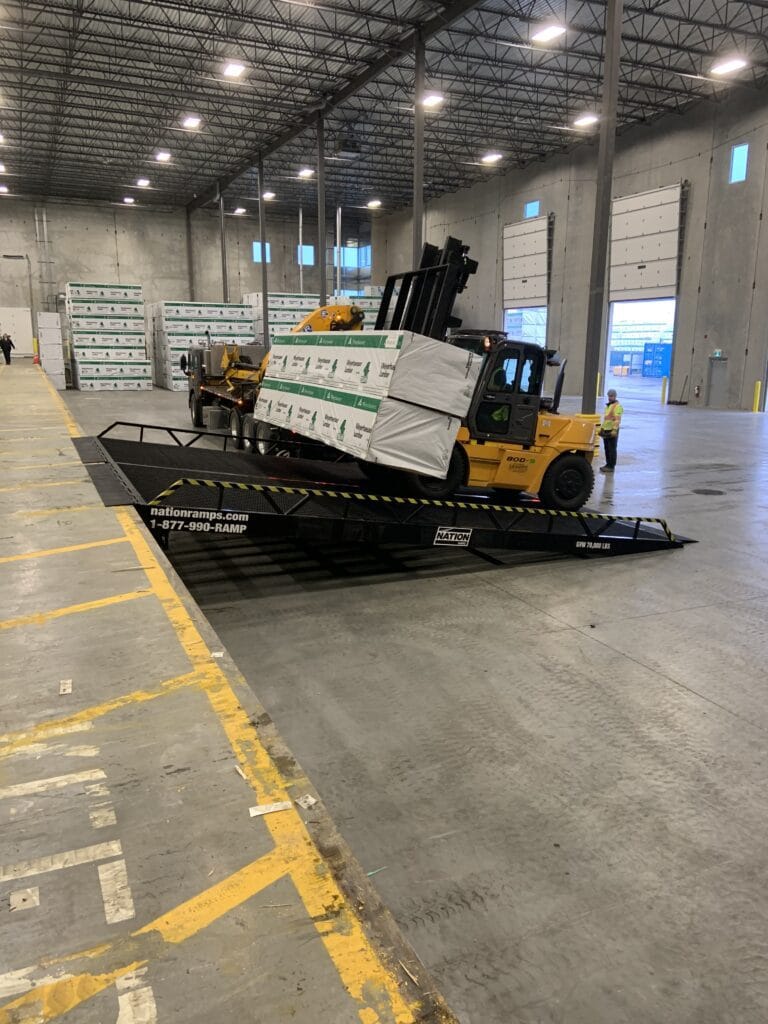
Loading dock service in Los Angeles, CA should start with a clear review of your facility, freight flow, trailer heights, forklift requirements and the problem you are trying to solve. For operations that need added loading capacity rather than door or dock-leveler repair, portable and ground-to-dock ramp systems can create flexible access without a permanent dock expansion. Expect the process to include site measurements, capacity review, equipment selection, delivery planning and a safety-focused setup.
Los Angeles warehouses and distribution facilities operate in a demanding freight environment, so a loading problem can quickly affect receiving schedules, outbound shipments and labor efficiency. When you are evaluating loading dock service in Los Angeles, CA, the first step is to define the actual issue. A damaged dock door or pit leveler may require a local repair contractor, while a facility that needs more loading positions, access from ground level or temporary capacity may need a ramp or portable dock solution.
At Nation Ramps, we focus on professional loading systems that help facilities create or expand loading access. Our commercial ramp solutions can be configured around trailer height, forklift traffic, available space and whether the need is short term or permanent. Here is what a Los Angeles facility should expect when planning a ramp-based loading dock project.
1. A Review Of Your Loading Workflow
A productive project starts with the way freight actually moves through the site. Expect questions about trailer types, receiving and shipping volume, forklift models, maximum loaded weight, dock height, approach space and how often the loading point will be used. The goal is to avoid selecting equipment based only on a general description such as “yard ramp” or “dock ramp.”
For example, a grade-level building that receives standard trailers may need Portable Loading Docks, while an operation that must connect ground level to an existing elevated dock may be better suited to another configuration. The correct setup depends on the physical site and operating pattern, not only the industry.
2. Site Measurements And Height Verification
Measurements are critical before equipment is specified. A provider should confirm the working height range, usable width, approach length, available turning area and any obstacles that affect positioning. Trailer heights can vary, and a ramp that works for one loading condition may not be appropriate for another.
Los Angeles facilities may also have tight industrial yards, shared drive aisles or space constraints around older buildings. Those conditions should be considered early so the selected system can be positioned without creating a new traffic bottleneck.
3. Capacity And Equipment Matching
The ramp must be evaluated against the full operating load, including the forklift or other equipment, the carried load and the intended traffic pattern. Some systems are available in multiple rated capacities, but the model should be selected for the actual application rather than by choosing the largest number on a specification sheet.
Load ratings vary by application — contact our team for specs tailored to your use case.
A detailed discussion should also cover wheelbase, turning requirements, tire type, load dimensions and whether tracked equipment will use the ramp. These details can influence deck style, width, approach angle and optional features.
4. A Safety And Compliance Review
For U.S. facilities, OSHA 29 CFR 1910 includes requirements relevant to walking-working surfaces and powered industrial trucks, including 29 CFR 1910.178. A loading-ramp project should be reviewed as part of the facility’s broader traffic and safety program. A qualified safety professional should evaluate the specific setup, operator procedures, fall hazards, vehicle movement and site conditions.
Features such as high-traction surfaces, side rails, handrails or other protective components may be appropriate depending on the application. The important point is to match the equipment and operating procedures to the site rather than treating any single product feature as a blanket compliance guarantee.
5. Choosing Between Purchase, Rental And Lease Options
Not every Los Angeles project has the same timeline. A facility expansion or long-term dock limitation may support a purchase, while seasonal volume, a temporary project or a building transition may be better served through ramp & platform rental services. Lease options can also provide another path when the operational need is longer term but the business does not want to purchase immediately.
Availability, delivery timing and commercial terms depend on the equipment and location. Contact Nation Ramps to check availability and pricing in your area.
6. Delivery, Setup And Final Operational Checks
Once the configuration is confirmed, delivery planning should cover access, unloading, placement and setup. Before use, verify ramp position, clearances and traffic flow, and make sure operators understand the approved route. For a fixed connection between grade level and an elevated dock, Ground to Dock Ramps can be matched to the site dimensions and load requirements.
Plan Your Los Angeles Loading Solution
If your Los Angeles facility needs added dock capacity, ground-to-trailer access or a temporary loading setup, we can help you compare standard and custom options. Share your equipment, load, height, space and project timeline with our team so we can identify a practical configuration and discuss purchase, rental or lease availability for your operation.
FAQs
What Is The Difference Between Loading Dock Repair And A Loading Ramp Solution?
Loading dock repair typically addresses existing doors, levelers, seals, restraints or related dock equipment. A loading ramp solution creates or expands access between ground level, trailers and dock-height areas. At Nation Ramps, we focus on the ramp and portable loading-system side of that need.
Can A Portable Loading Dock Be Used At A Grade-Level Los Angeles Facility?
Yes, depending on the site, trailer height, equipment and required capacity. A portable system can create a loading position without constructing a conventional permanent dock, but the application should be reviewed before a model is selected.
How Do I Know What Capacity My Loading Ramp Needs?
Start with the maximum operating weight of the forklift or equipment plus the carried load, then review the full application, including dimensions, traffic frequency, height and site conditions. Load ratings vary by application — contact our team for specs tailored to your use case.