
Loading Dock Safety: Best Practices For Industrial Environments
Quick Summary
Loading dock safety depends on the interaction between physical infrastructure, equipment quality, trained personnel, and consistent maintenance. Defined traffic zones, properly rated steel ramps, anti-slip surfaces, and wheel chocks address the most common sources of dock incidents. Operator training grounded in real scenarios closes the gap that equipment alone cannot. Written safety plans that adapt to changing workflows, seasonal demands, and new equipment keep protection measures current rather than reactive.
Loading dock safety is an operational discipline that must be integrated into your facility’s daily operations.
At Nation Ramps, we’ve worked with industrial facilities across North America long enough to know that the docks with the fewest incidents aren’t lucky. Instead, they’re structured, well-equipped, and consistently maintained.
What Loading Dock Safety Requires
True loading dock safety combines physical infrastructure, equipment quality, trained personnel, and documented procedures. No single element covers the others. A well-built ramp doesn’t compensate for poor traffic flow planning. Trained operators can’t fully overcome worn surfaces or undersized equipment. Safety at the dock level works when all the components are addressed together.
The stakes are significant. Dock areas consistently rank among the most hazardous zones in industrial and warehousing environments, with falls, forklift incidents, and equipment failures accounting for a substantial share of workplace injuries. Getting the fundamentals right protects your people, reduces liability, and keeps operations running without costly interruptions.
The Hazards Unique to Loading Docks
Dock hazards don’t follow a single pattern. They emerge from the combination of tight spaces, heavy machinery, time pressure, and constantly changing conditions. Understanding where risk concentrates helps facilities address it before an incident occurs.
Common hazard sources include:
- Forklifts and pedestrians sharing the same travel paths without a defined separation
- Unbalanced or improperly secured loads shifting during transport across ramps
- Misaligned or unsecured trailers create gaps between the vehicle and the dock
- Slippery surfaces from moisture, spills, or worn anti-slip coatings
- Low visibility conditions during early shifts, poor weather, or inadequate lighting
- Peak period pressure leading to skipped safety checks or rushed procedures
Risk increases sharply during high-volume periods when staffing is stretched, and the pace of operations leaves less room for deliberate decision-making. Recognizing these pressure points allows supervisors to apply additional oversight exactly when it’s needed most.
Traffic Flow and Signage: Control Through Clarity
A safe dock starts with clearly defined movement zones. Forklift paths and pedestrian walkways should be physically separated wherever layout permits, using painted floor markings, barriers, or partitions. Overhead mirrors at intersections and corners improve sightlines in areas where blind spots are unavoidable.
Signage does more than give directions. It sets expectations and communicates the rules of the space without requiring verbal instruction at every interaction. Effective dock signage includes:
- Speed limit indicators for forklift travel zones
- “Truck in bay” alerts that signal active loading to approaching personnel
- Restricted-access zone markers at elevated platform edges and unsecured trailer positions
- Emergency exit and evacuation route postings at visible intervals
Lighting conditions matter as much as signage. Floodlights, illuminated dock shelters, and high-visibility safety vests extend safe operating conditions into low-light hours and adverse weather situations. A dock that’s well-lit and well-marked runs more predictably and with fewer avoidable incidents.
Fall Protection Measures and Platform Security
Falls from elevated surfaces are a leading cause of injury in dock environments. Dock platforms, trailer edges, and loading ramps must be treated as potential fall points. Simple mechanical guards such as dock bumpers, dock levelers, and edge barriers can help limit this risk.
When trailers are not yet secured to a bay, placing visual indicators or temporary gates at the edge of a platform keeps foot traffic from unknowingly stepping into an open space. Some facilities use automatic restraint systems that lock trailers into position to prevent separation during loading.
Fall protection measures also include surface treatments. Non-slip coatings on ramps and dock plates reduce the chance of slips, especially during wet or icy conditions. Regular inspections of these surfaces should be built into facility routines to catch any early signs of wear.
Loading Equipment That Supports Safety
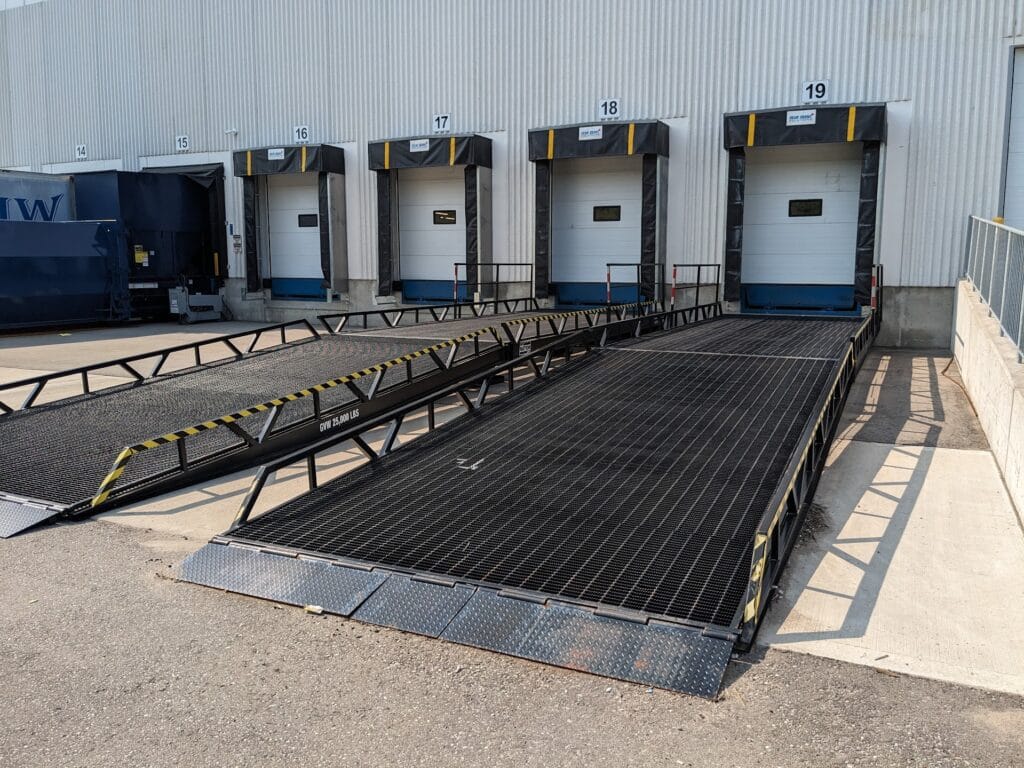
The right equipment makes a meaningful difference in dock safety. High-capacity equipment loading ramps and portable ramps must be rated for the loads they carry. Using tools beyond their limits can lead to failures that compromise both product and personnel.
Portable loading ramps are particularly valuable for facilities operating in temporary spaces or handling trucks with varying truck heights. Their adjustability and ease of relocation give teams flexibility while maintaining a secure link between vehicle and ground or platform.
When selected thoughtfully and used correctly, they support both performance and accident prevention.
In industrial environments, wheel chocks are another underused but important safety tool. Placing chocks behind trailer tires prevents unexpected movement during loading. When combined with hand signals or lockout procedures, they become part of a larger communication system that protects workers from preventable incidents.
Training Employees for Real-World Scenarios
Equipment and infrastructure alone do not make a dock safe. The people using those tools must be well-trained and fully aware of the risks and responsibilities they face. Dock safety training should be ongoing, scenario-based, and interactive.
Teams need to practice real-life responses to common situations: a forklift operator working through a blocked path, a worker responding to an unbalanced pallet, or a team loading in low-light conditions. Training should include proper lifting techniques, emergency exit plans, lockout/tagout procedures, and the correct way to report near-misses.
Refresher courses keep safety front of mind, especially when hiring new staff or launching new workflows. Posters, team briefings, and digital training modules help reinforce important lessons between formal training sessions. A well-trained team is alert, confident, and better prepared to act quickly when problems arise.
Dock Maintenance as a Daily Safety Practice
Regular inspection of the dock area is not a background task. It is part of maintaining safety to check dock levelers, ramps, mechanical restraints, and overhead doors for wear or damage at the start of each shift.
Small issues can escalate if overlooked. Rust on metal platforms, missing bolts, or cracked welds may not cause immediate failure, but they weaken the system’s integrity over time.
Cleaning also plays a part in dock safety. Spills, packaging debris, and pooling water all introduce slipping hazards. A clean dock is more than an aesthetic benefit; it directly affects traction, visibility, and safety.
Documentation of inspections helps build a record that tracks recurring problems, provides proof of compliance, and helps identify areas for long-term improvement. Maintenance logs should be accessible, clear, and regularly reviewed by team leads.
Adapting Safety Measures to Changing Workflows
No two docks operate under exactly the same conditions. Seasonal shifts, new inventory types, and equipment updates all introduce new variables. A facility’s safety protocols must be flexible enough to adapt to these changes without losing structure.
Adding larger shipments may require higher capacity ramps or longer load windows. Introducing third-party drivers means new people are entering your dock space every day. Temporary changes (such as outdoor tents during summer logistics overflow) require quick safety assessments.
Having a written safety plan that changes with circumstances (in real time) gives teams a baseline to follow. When the layout changes or new tools are introduced, the plan can be updated and reviewed to keep all employees on the same page.
Working with an Experienced Partner
A dock safety strategy becomes stronger when supported by a knowledgeable supplier. An established ramp supplier brings more than just equipment. They offer guidance on the right materials, safety features, and configurations based on your facility’s unique environment.
Their input can help align equipment choices with best practices in the field.
Working with a supplier who understands North American safety standards, terrain variations, and heavy-duty performance needs can reduce guesswork when adding or upgrading ramps. A good supplier also backs their products with service, parts availability, and consultation when new challenges arise.
Customized solutions are often the best option for businesses with unique layouts, space limitations, or specialty goods. Having access to customized ramps, loading platforms, or accessories helps businesses meet safety goals without compromising operational goals.
Prioritizing Safety From the Ground Up
Nation Ramps believes that loading dock safety starts with high-quality equipment designed for the realities of industrial work. Every ramp, platform, and accessory we design is built to meet the safety challenges of active facilities.
We work closely with our clients to identify their layout, load demands, and daily operations. That insight allows us to recommend ramp systems that support productivity without sacrificing safety.
We offer custom and ready-to-ship solutions, serving clients across North America who require reliable tools for demanding environments. Our line of portable loading ramps and equipment loading ramps meets a wide range of needs, from temporary job sites to high-volume distribution centers.
Our team brings years of experience to every project, helping customers protect their teams and cargo with confidence.
If your facility is reevaluating dock safety or adding new loading areas, we’re here to help. Connect with us today to discuss your needs or explore our full range of ramp solutions.
FAQs
What is the most overlooked safety measure at a loading dock?
Wheel chocks are frequently underused despite being one of the simplest and most effective controls available. Placing chocks behind trailer tires during every loading cycle prevents unexpected trailer movement. It’s a leading cause of serious dock injuries that most facilities could eliminate entirely.
How often should loading dock surfaces be inspected for wear?
Surface inspections should happen at the start of every shift, not just during scheduled maintenance windows. Anti-slip coatings, ramp grating, and dock plate surfaces degrade gradually. Catching early wear before it compromises traction is significantly less disruptive and less costly than addressing a surface failure mid-operation.
When does a facility need a custom ramp instead of a standard one?
Non-standard dock heights, constrained floor space, specialized freight, or unusual facility layouts typically exceed what standard ramp configurations can safely accommodate. Custom ramps are engineered around those specific conditions, eliminating the operational compromises and safety gaps that arise when facilities adapt standard equipment to situations it wasn’t designed to handle.