
The Value Of Hiring A Loading Dock Service For Houston Distribution Centers
Quick Summary
Professional loading dock services help Houston distribution centers maintain efficient freight movement, manage equipment requirements, and reduce operational disruptions. Proper ramp selection, organized installation, and dependable technical support improve access between trailers and warehouse facilities. Experienced providers also help assess load capacity, site conditions, and changing shipping demands. Nation Ramps offers engineered loading equipment, flexible purchasing arrangements, and installation assistance for industrial operations. Suitable solutions support safer handling practices and long-term productivity across demanding distribution environments.
Houston distribution centers handle substantial freight volumes across manufacturing, retail, energy, and international shipping networks. Reliable loading infrastructure helps maintain delivery schedules and prevent unnecessary warehouse congestion.
Choosing a loading dock service in Houston involves more than obtaining industrial equipment. Proper site assessments, suitable ramp configurations, and installation planning directly influence material handling performance.
Limited dock access, changing trailer heights, and increased shipment volumes can create operational problems without appropriate equipment.
Nation Ramps brings over 15 years of ramp design experience to industrial loading projects. Our team provides standard and custom solutions supported by practical engineering knowledge and flexible equipment arrangements.
1. Improve Freight Movement And Warehouse Productivity
Distribution centers depend on consistent material movement between trailers, staging areas, and storage locations.
Inefficient dock arrangements can create truck queues, increase forklift travel distances, and delay outgoing shipments.
Professional equipment guidance helps identify limitations affecting daily operations.
A thorough assessment examines trailer positioning, material handling routes, available maneuvering space, and existing platform conditions.
Additional loading access may reduce congestion when shipment volumes exceed permanent dock capacity.
Clear traffic patterns also help separate receiving activities from outbound freight movements.
These improvements allow facilities to organize operations more effectively without unnecessary structural changes.
2. Choose Equipment For Specific Loading Requirements
Industrial loading equipment must accommodate different cargo weights, forklift dimensions, and working elevations.
A ramp suitable for palletized inventory may not support heavy machinery or oversized industrial components.
Experienced equipment specialists assess these requirements before recommending a configuration.
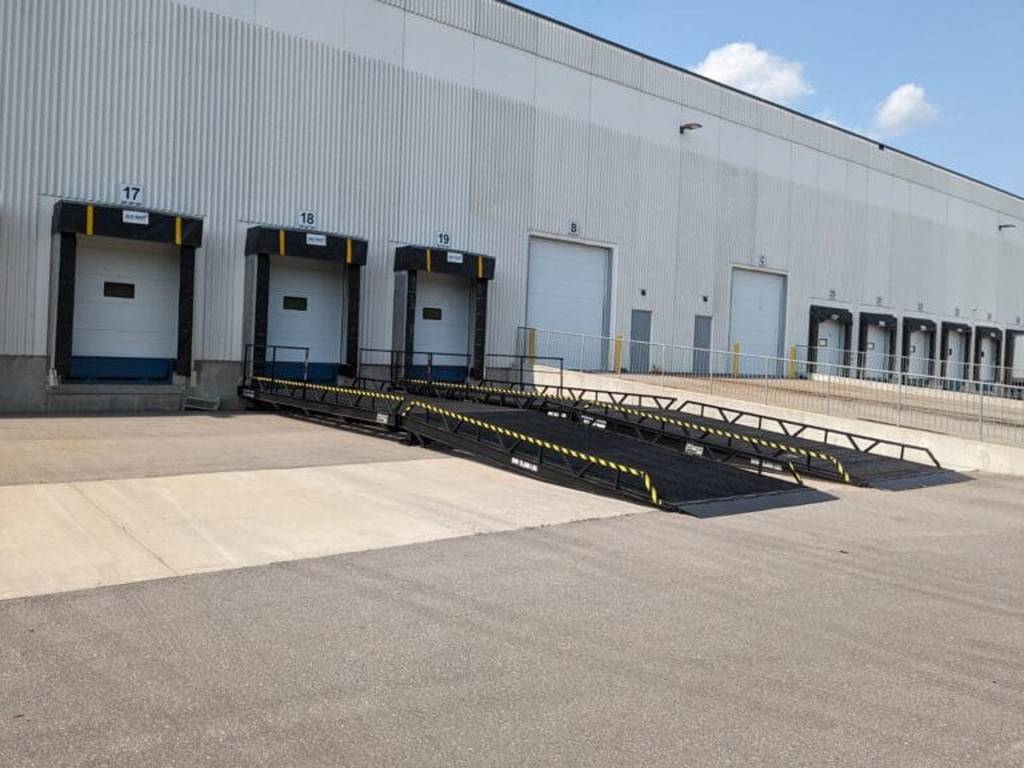
Nation Ramps supplies Ground to Dock Ramps for facilities requiring access between ground-level surfaces and elevated loading positions.
Certain heavy-duty configurations offer rated capacities of 70,000 pounds, depending on the selected model.
Capacity assessments must account for forklift weight, attachments, operators, and transported materials.
Load ratings vary by application. Contact our team for specs tailored to your use case.
Correct equipment selection supports dependable transfers while reducing unsuitable operating conditions. For a broader comparison, see our list of 10 types of loading dock ramps and which one fits your facility.
3. Reduce Disruptions Through Professional Installation
Poor equipment positioning can interfere with vehicle access, loading angles, and forklift movement.
Professional installation services help establish suitable working arrangements before regular operations begin.
Proper setup involves assessing ground conditions, confirming equipment alignment, and checking available clearance.
Installation planning also considers transportation access, site restrictions, and operational schedules.
Nation Ramps provides Logistics and Installation Services for industrial loading equipment across North America.
Our team coordinates transportation, positioning, and setup requirements based on individual projects.
For Houston distribution centers, organized deployment can limit unnecessary interruptions during equipment changes.
Actual delivery schedules depend on location, equipment availability, and project requirements.
4. Accommodate Changing Freight Volumes
Distribution activity frequently changes because of seasonal demand, new contracts, and warehouse expansion.
Permanent loading infrastructure may become insufficient when additional trucks arrive during peak shipping periods.
A reliable loading dock service in Houston helps identify equipment suitable for temporary capacity increases.
Portable ramps and platforms can establish additional transfer locations when operating conditions permit.
Nation Ramps offers Portable Loading Docks for temporary facilities, distribution operations, and changing warehouse layouts.
These systems provide alternatives when constructing permanent docks would require considerable time and investment.
Rental agreements can support short-term projects, while purchasing or leasing may suit extended requirements.
Flexible arrangements allow facilities to match equipment commitments with actual operational demand. Our article on portable loading docks as flexible solutions for on-the-go operations explains how these systems work.
5. Support Safer Material Handling Practices
Loading areas combine heavy vehicles, forklift traffic, elevated surfaces, and frequent freight transfers.
Equipment selection and site organization play important roles in controlling these risks.
Suitable loading systems provide defined operating surfaces, appropriate working heights, and designated access routes.
For American distribution centers, OSHA 29 CFR 1910 establishes relevant general-industry workplace safety requirements.
OSHA 29 CFR 1910.26 specifically addresses dockboard load capacity, secure positioning, vehicle movement, and handling provisions.
Equipment should meet common OSHA requirements for applicable loading activities, with suitability assessed for each installation.
Facilities should consult a qualified safety professional to determine relevant regulatory obligations.
Routine inspections, operator training, and documented procedures remain necessary throughout equipment use.
6. Address Houston’s Climate And Site Conditions
Houston’s humid climate, heavy rainfall, and occasional flooding introduce challenges for outdoor loading arrangements.
Standing water can affect surface traction, while prolonged moisture exposure may contribute to steel corrosion.
Professional assessments should examine drainage, ground stability, equipment positioning, and available working space.
Industrial ramps require appropriate surface characteristics and maintenance procedures for their intended environments.
Regular inspections help identify damaged decking, deteriorating finishes, and unsuitable operating conditions.
Loading operations may require restrictions during severe storms or when standing water compromises access.
Proper site preparation helps reduce preventable interruptions caused by environmental conditions.
7. Manage Equipment Costs With Flexible Arrangements
Permanent loading infrastructure represents a considerable investment, particularly when additional dock positions require construction.
Not every distribution center needs equipment throughout the year.
Renting offers an alternative for temporary projects, while purchasing may provide better value for continuous operations.
Leasing also supports facilities requiring equipment over longer periods without immediate ownership.
Nation Ramps offers new, used, rental, lease, and custom-engineered loading solutions.
Our North American rental fleet includes more than 120 units across various equipment configurations.
Contact Nation Ramps to check availability and pricing in your area.
Comparing expected usage, transportation requirements, and project duration helps identify suitable arrangements.
8. Benefit From Experienced Engineering Support
Unusual warehouse layouts sometimes require more than standard loading equipment.
Restricted yard space, irregular dock heights, and specialized machinery can create difficult access requirements.
Nation Ramps provides custom engineering supported by over 15 years of industrial ramp design experience.
Our manufacturing operations in the United States and Canada support equipment requirements throughout North America.
Specialized configurations can address working dimensions, load requirements, and facility restrictions.
Long-term equipment relationships also provide continuity when operational needs change.
Experienced guidance helps facilities evaluate practical solutions rather than relying on unsuitable standard configurations.
Find Reliable Loading Dock Solutions With Nation Ramps
Choosing the right loading dock service in Houston starts with understanding freight requirements, site conditions, and equipment specifications.
Nation Ramps provides engineered loading solutions, installation assistance, and flexible purchasing arrangements for industrial facilities.
Our experienced team can review existing challenges and recommend configurations suited to demanding distribution operations.
Explore our Loading Ramp Solutions in Houston, Texas or contact Nation Ramps at 1-877-990-7267 to discuss equipment requirements and available options.
FAQs
What Services Help Improve Distribution Center Loading Operations?
Equipment assessments, ramp selection, transportation coordination, and installation assistance can improve freight handling. Suitable solutions depend on trailer dimensions, forklift specifications, available space, and operating requirements.
Can Houston Distribution Centers Rent Loading Equipment?
Yes. Nation Ramps offers rental, purchase, and lease options for qualifying industrial loading applications. Rental suitability depends on equipment specifications, project duration, and regional availability.
Contact Nation Ramps to check availability and pricing in your area.
How Can Loading Dock Equipment Support Workplace Safety?
Properly selected equipment provides appropriate load capacity, stable access, and suitable operating dimensions. Facilities should follow applicable OSHA 29 CFR 1910 requirements, perform regular inspections, and consult qualified safety professionals.