
Why Loading Dock Support Matters For Los Angeles Warehouses
Quick Summary
Los Angeles warehouses can use portable and modular loading equipment to add capacity, support mixed trailer heights and keep freight moving during peaks or disruptions. The right solution depends on site geometry, forklift loads, project duration and whether the facility should buy, rent, lease or use a custom configuration.
A Los Angeles loading dock can become a bottleneck quickly when trailer heights vary, freight volume changes or a facility does not have enough usable dock positions. Reliable loading support gives warehouse teams practical options for keeping freight moving without forcing every operational change into permanent construction.
At Nation Ramps, we support warehouses and distribution operations with new, used, rental, lease and custom loading systems. Our Loading Ramp Solutions in Los Angeles, California are designed around the actual equipment, dock geometry and project duration rather than a one-size-fits-all setup.
Loading Dock Support Adds Flexibility When Conditions Change
Warehouse demand is not static. A new account, temporary overflow, a construction project or a disabled dock position can create an immediate need for additional loading access. Portable equipment gives managers a way to add capacity without waiting for a major facility modification.
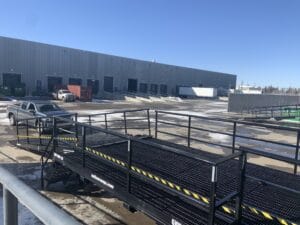
The same flexibility matters when a building has grade-level doors but no conventional elevated dock. Depending on the operation, Portable Loading Docks can create an adjustable loading position for common trailer types while Ground to Dock Ramps can provide a dedicated path between grade and an existing dock.
Support Protects Throughput When One Dock Position Is Not Enough
Dock congestion does not always justify a permanent expansion. Sometimes the issue is a short receiving window, a carrier mix that exceeds the available dock heights or a temporary surge in outbound volume. An additional ramp or portable dock can give supervisors another workable loading path and reduce the number of moves required to reposition trailers or freight.
That extra capacity can also support contingency planning. If construction, maintenance or a damaged dock position takes part of the building offline, a portable system can help preserve access while the permanent area is restored. The goal is not to create a duplicate dock everywhere, but to keep a practical fallback available for critical workflows.
The Right Support Starts With A Site Review
Before recommending equipment, the loading area should be measured and the workflow mapped. Key details include trailer deck heights, forklift type, maximum loaded weight, usable width, approach distance, turning space, traffic direction and how often the equipment will be used.
This review is especially important in dense sites where yard space is limited. The ramp has to solve the loading problem without blocking truck circulation, emergency access, pedestrian routes or other dock positions. Our commercial ramp solutions can be configured for commercial and industrial operations that need a broader loading plan.
Portable Loading Docks Can Support Peaks And Disruptions
Portable loading docks are useful when capacity needs to move with the operation. Standard Nation Ramps PLD models are available in 20,000 and 30,000 lb GVW capacities with adjustable height configurations. Load ratings vary by application — contact our team for specs tailored to your use case.
For short-term demand, Portable Loading Dock Rentals can support temporary projects, seasonal volume or facility changes. Contact Nation Ramps to check availability and pricing in your area. Rental can also provide a practical way to evaluate a workflow before committing to a purchase.
Support Also Means Planning For Safe Daily Use
For U.S. warehouse operations using forklifts, OSHA 29 CFR 1910.178 addresses powered industrial trucks. Equipment selection is only one part of the safety program. Operators still need appropriate training, inspections, traffic controls and site procedures, and a qualified safety professional should determine which requirements apply to the facility.
Daily checks should include the ramp surface, transition plates, rails, supports and surrounding approach area. If equipment is moved or repositioned, confirm the new location before use rather than assuming a setup that worked in one dock position will work identically in another.
When Custom Engineering Makes Sense
Standard equipment covers many warehouse needs, but some Los Angeles facilities have unusual dock heights, constrained yards or specialized traffic. Custom loading ramps can be designed around non-standard dimensions, capacities and configurations when an off-the-shelf layout does not fit.
The best support model is the one that gives the facility enough capacity without adding unnecessary complexity. That may mean one portable dock, a ground-to-dock connection, a rental during peak volume or a custom system for a permanent workflow.
Coordinate Delivery, Setup And Ongoing Inspection
A loading solution is only useful if it can be delivered and positioned without creating a new yard problem. Confirm transport access, unloading space, final placement, overhead clearances and any restrictions on where equipment can sit. For dense Los Angeles properties, this step should happen before delivery rather than after the truck arrives.
After setup, verify transitions and clearances and establish an inspection routine. If the equipment is repositioned, repeat the site check. Consistent support includes knowing who to call when requirements change and when a standard configuration no longer fits the operation.
Build A More Flexible Los Angeles Loading Operation
If dock capacity, trailer variation or temporary demand is putting pressure on your warehouse, share the site dimensions, equipment weights and operating goals with Nation Ramps. We can help compare buy, rent, lease, used and custom options and identify a loading setup that supports the workflow without overbuilding it.
FAQs
Why would a Los Angeles warehouse use a portable loading dock?
A portable dock can add loading access at a grade-level facility, support overflow volume or provide temporary capacity during construction or equipment downtime without requiring a permanent dock addition.
Can one ramp work with different trailer heights?
Some adjustable systems are designed for multiple trailer heights, but the correct range depends on the model and site. Confirm the actual trailer mix, operating height and transition requirements before selecting equipment.
Is renting better than buying for warehouse loading support?
Renting can fit temporary or uncertain needs, while purchasing may make more sense for steady long-term use. Lease and used options can also be compared. Contact Nation Ramps to check availability and pricing in your area.