
When Do You Need A Portable Loading Ramp?
Quick Summary
A portable loading ramp can help when your facility has no permanent dock, your loading area is too crowded, or your team needs temporary access for changing work conditions. It can also support safer and more efficient movement for heavy freight, equipment, containers, vehicles, and oversized materials. Choosing the right ramp depends on your load capacity, site layout, equipment type, timeline, and daily workflow needs.
Moving freight safely depends on having the right access point at the right time. A portable loading ramp can solve that problem when your dock space, yard layout, or receiving process cannot keep pace with daily work. It gives your team a practical path between ground level, trucks, trailers, containers, and work zones. For businesses that handle equipment, pallets, vehicles, or heavy materials, the right ramp can reduce delays, support safer movement, and help loading teams stay productive through changing conditions across busy industrial sites and docks.
You Do Not Have a Permanent Loading Dock
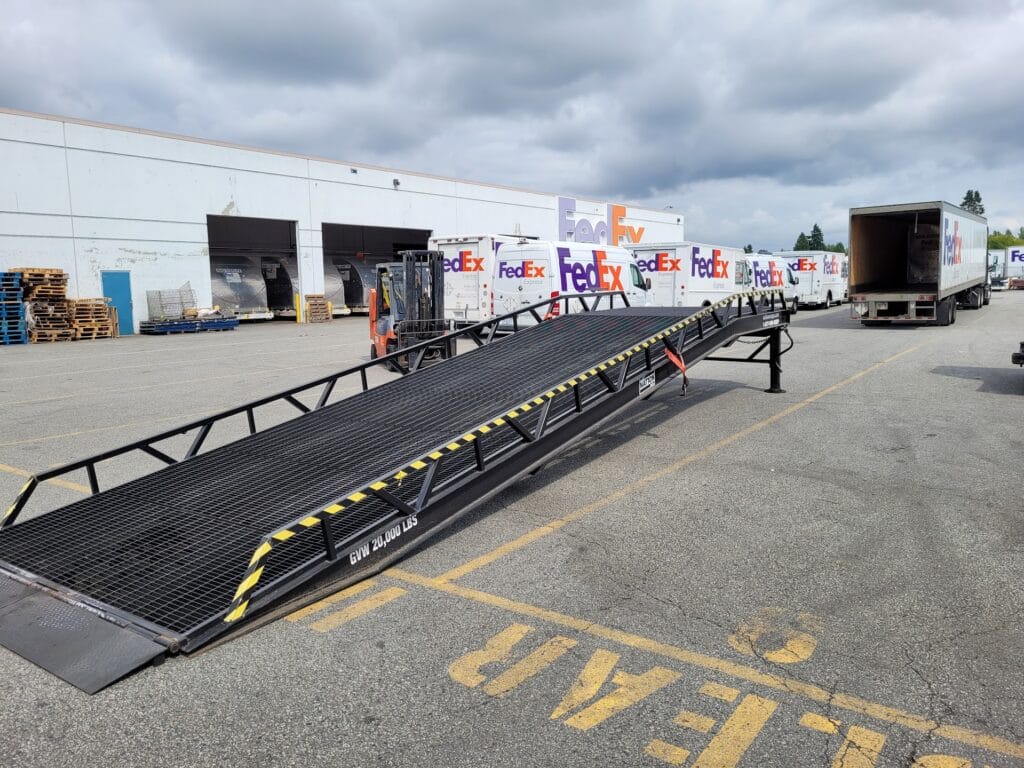
Some facilities receive shipments before a fixed dock is available. Others operate from yards, storage lots, temporary buildings, or older properties that were never built for frequent freight movement. In those situations, loading from ground level can slow the entire process and place more strain on workers and equipment. A ramp creates a direct path between the ground and the trailer, which helps forklifts or other approved equipment move freight with greater control. This setup can help growing warehouses, construction sites, farms, equipment yards, and businesses that need loading access without major building changes. It supports receiving work while a permanent dock plan is reviewed.
Your Loading Area Cannot Keep Up with Demand
A busy dock can quickly become a bottleneck when multiple trucks arrive, orders increase, or shipping schedules tighten. Even a well-planned facility can struggle when one dock door must support receiving, staging, outbound freight, and returns. A ramp can add another loading point, which helps separate workflows and reduce waiting time for drivers and warehouse teams. During peak periods, this added access can help your staff keep materials moving instead of stacking work around one crowded area. Extra loading capacity can support smoother scheduling when daily volume changes without much warning. It can help managers handle late arrivals, overflow trailers, and urgent shipments smoothly.
You Need Temporary or Flexible Loading Access
Temporary work often needs dependable loading access without permanent construction. Short projects, facility moves, overflow storage, seasonal yards, event operations, and renovation work can all create short term loading demands. A movable ramp gives your team the option to set up access where the work is happening, then relocate it as conditions change. This can be useful when a site layout shifts, a project timeline changes, or a business needs to test a new workflow before investing in fixed infrastructure. Renting or leasing makes sense when the need is limited to a specific period. It gives room to solve the loading problem without overcommitting.
Your Team Handles Heavy Equipment or Large Freight
Large freight needs more than a basic access point. Forklifts, machinery, vehicles, pallets, containers, and oversized materials require a ramp that matches the load, height, width, surface, and turning needs of the job. A properly selected ramp can help equipment operators move with more stability and less interruption between trucks, trailers, yards, and storage zones. This matters for construction crews, manufacturers, distribution teams, transportation companies, military operations, and equipment dealers. Before choosing a ramp, your team should consider capacity, grade, traction, side protection, connection points, and the types of equipment that will use it. Matching those details reduces delays, damage, and avoidable strain during loading.
Safety and Efficiency are Becoming a Concern
Loading work becomes harder when teams rely on awkward movements, uneven transitions, or repeated manual handling. Small gaps, steep angles, slick surfaces, and crowded dock areas can create avoidable risk during daily operations. A well matched ramp helps create a smoother route for approved equipment and can reduce unnecessary lifting, carrying, and repositioning. Safety planning should include ramp capacity, proper placement, stable connections, traction, visible edges, operator training, and regular checks before use. Better access can also improve efficiency because teams spend less time working around obstacles and more time completing the actual loading task. That steady movement can support cleaner workflows, safer staging, and stronger daily productivity overall results.
Keep Your Loading Operation Moving with the Right Ramp
A loading ramp becomes a smart investment when your current setup slows freight movement, limits dock access, creates safety concerns, or cannot adapt to changing work conditions. You may need one when your business has no permanent dock, your loading area is too crowded, your project is temporary, or your team handles heavy equipment, containers, vehicles, or oversized freight. Nation Ramps helps you choose a practical solution based on your site, timeline, load requirements, equipment, and budget. We offer new, used, rental, lease, standard, and custom ramp solutions across North America, with manufacturing capabilities in the United States and Canada. Our team can also support custom design and engineering when your facility needs more than a standard loading setup.
Contact us today to find the right ramp solution for your business and keep your loading operation moving with confidence.
FAQs
When should a business use a portable loading ramp?
A business should use a portable loading ramp when it needs safer and faster access between ground level, trailers, containers, or loading areas. It is useful when there is no permanent dock, dock space is crowded, freight volume increases, or temporary loading access is needed for a project, move, or seasonal operation.
Can a portable loading ramp handle heavy equipment?
Yes, the right portable loading ramp can support heavy equipment, vehicles, forklifts, pallets, and large freight when it is selected for the correct weight capacity, width, grade, and surface. Before choosing one, your team should review the load requirements, site layout, equipment type, and daily loading process.
Is renting a portable loading ramp a good option?
Renting can be a smart option when your loading need is temporary, seasonal, or tied to a short project. It can help your business gain loading access without committing to permanent construction or a full purchase. Rental options are often useful for warehouse overflow, facility changes, events, and construction sites.