
Industry Standards For Forklift Ramp Design And Use
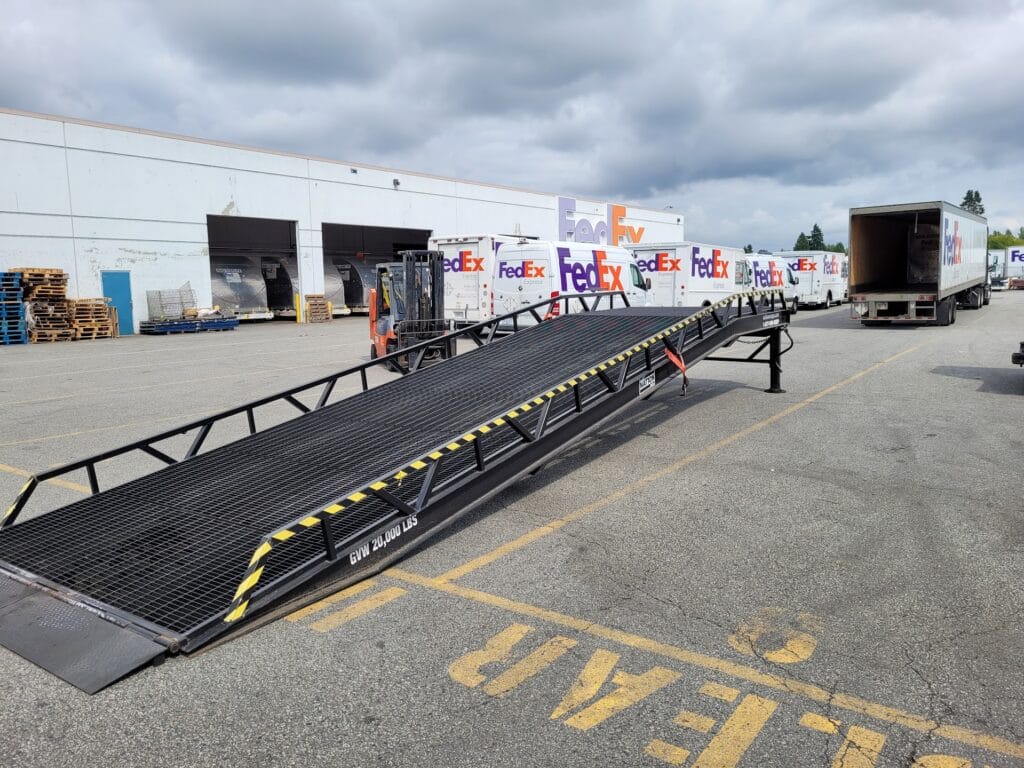
Quick Summary
Forklift ramp safety is governed by standards established by organizations such as OSHA and ANSI, covering structural integrity, load capacity, surface traction, slope gradient, and inspection frequency. Steel construction, anti-slip surfaces, and properly calculated incline ratios are the design elements that keep operators protected and equipment performing under sustained industrial use. Operator training and routine compliance inspections carry equal weight alongside ramp quality. Choosing the right configuration, portable, ground-to-dock, or custom, determines how well those standards translate into daily operations.
Forklifts operate under significant mechanical stress, and the ramps they travel across need to match that reality. Understanding the industry standards for forklift ramp design is what separates a loading setup that performs day after day from one that creates avoidable risk.
At Nation Ramps, we design and manufacture steel ramp solutions that meet or exceed North American safety requirements. With us, operations across the continent gain a foundation they can count on.
Why Industry Standards for Forklift Ramp Design Exist
Standards don’t appear out of nowhere. Organizations like OSHA and ANSI developed forklift ramp guidelines in direct response to documented workplace incidents, equipment failures, and injury patterns. These frameworks establish minimum performance thresholds that protect operators, cargo, and the facilities themselves.
Following established standards also creates a consistent benchmark for evaluating ramp options. A ramp that meets OSHA and ANSI specifications has been held to defined criteria for load capacity, surface traction, slope gradient, and structural performance. Our portable loading dock ramps are designed with these benchmarks in mind, providing flexibility without compromising the safety requirements governing industrial ramp use.
Structural Integrity and Load Capacity
One of the most important aspects of forklift ramp design is structural integrity. A properly engineered ramp must withstand the forklift’s weight and the load it carries without flexing or failing. Industry standards require that ramps be built from durable materials, such as heavy-duty steel, and be properly welded.
Load capacity ratings are also essential, and you must always choose a ramp with a capacity that exceeds your heaviest operational demands. Factoring in dynamic forces, such as the impact of forklifts braking or accelerating on the ramp, is equally important. This ensures that the ramp performs reliably under real-world conditions, prevents premature wear, and enhances overall safety for both operators and equipment.
Surface Design for Traction and Safety
Traction is another vital element of safe ramp use. Slippery surfaces can lead to accidents, especially in outdoor environments where rain, snow, or ice may be factors. Standards require ramps to include safety features such as serrated steel grating or anti-slip coatings. These features provide consistent traction, reducing the risk of forklifts sliding during loading and unloading.
Guard rails and curbs are often included in the design to provide additional protection for operators and equipment. In addition, proper drainage systems and regular surface maintenance are recommended to keep ramps clear of debris, moisture, and buildup that could compromise traction. By combining thoughtful design with ongoing upkeep, you ensure a safer, more reliable ramp environment for daily operations.
Proper Slope and Accessibility
The slope of a ramp plays a significant role in forklift safety. A ramp that is too steep can strain equipment and increase the likelihood of accidents.
Standards typically recommend slopes that balance ease of movement with operator control, ensuring forklifts can ascend and descend smoothly. Adjustable-height ramps are particularly valuable because they allow you to accommodate varying vehicle bed heights without compromising safety.
Accessibility considerations also include clear width requirements to make sure that forklifts of varying sizes can navigate the ramp safely. Proper slope also reduces wear on forklift brakes and transmissions, helping extend equipment life.
In addition, a gradual incline improves operator comfort. This allows for smoother transitions when handling loads, which in turn supports better productivity and reduces operator fatigue.
Compliance and Inspection Requirements
Owning or operating a forklift ramp means you are responsible for keeping it compliant with safety regulations. Routine inspections are part of these requirements and help identify wear, corrosion, or damage that could compromise structural integrity.
Many standards require ramps to undergo regular maintenance checks, and some jurisdictions may mandate official inspections. By maintaining compliance, you protect your workforce and extend the life of your ramp.
Keeping detailed records of inspections and maintenance activities also demonstrates accountability, provides documentation for audits, and helps track recurring issues. Proactive monitoring not only ensures safety but also minimizes costly downtime by addressing potential problems before they escalate.
Training and Safe Operation
Equipment quality and regulatory compliance only go so far without proper operator training. Industry standards are explicit on this point: operators must understand weight limits, approach speeds, load positioning, and the correct procedures for ascending and descending ramps under load.
Key safe operation practices include:
- Approaching ramps at a controlled, reduced speed
- Keeping loads stable and centered before and during ramp travel
- Never exceeding the ramp’s rated weight capacity
- Using ramps only for their intended application
- Following posted signage and facility-specific ramp protocols
Visible signage around dock areas reinforces these practices and keeps safety expectations consistent across shifts and personnel changes.
Choosing the Right Ramp Configuration
Compliance requirements apply across ramp types, and the configuration you choose should match both the standards and your specific operational layout. Ground-to-dock ramps address facilities without a raised dock, providing a compliant, graded access solution from floor level. Custom loading ramps accommodate non-standard dock heights, specialized equipment, or constrained site conditions where off-the-shelf options fall short.
Selecting the right configuration means fewer workarounds, better compliance outcomes, and a ramp that fits the actual demands of your operation rather than requiring it to adapt to it.
Nation Ramps designs and delivers steel forklift ramps across North America, with new, used, and rental options available for operations at varying stages of growth or within varying budgets. Our in-house engineering team evaluates your equipment, load requirements, and facility layout to recommend a solution that meets current safety standards.
Connect with our team, and let’s find the ramp configuration that keeps your facility moving and your operators protected.
FAQs
What organizations set the safety standards for forklift ramps in North America?
OSHA and ANSI are the primary bodies governing forklift ramp safety requirements in North America. Their guidelines cover load ratings, surface traction, slope limits, and inspection protocols. Ramps that meet or exceed these standards are considered compliant for commercial and industrial use.
How often should a forklift ramp be inspected?
Inspection frequency depends on usage intensity and local regulations. High-traffic operations benefit from more frequent visual checks, particularly for surface wear, joint fatigue, and corrosion. Keeping documented records of inspections helps track condition over time and satisfies compliance requirements during facility audits.
Can a forklift ramp be used for trailers of different heights?
Adjustable-height ramps are specifically designed to accommodate varying trailer and vehicle bed heights. Fixed ramps are optimized for a set dock height. Facilities that service multiple vehicle types typically gain more operational flexibility and safer transitions with an adjustable or custom-configured solution.