
What Is The Recommended Loading Dock Ramp Slope?
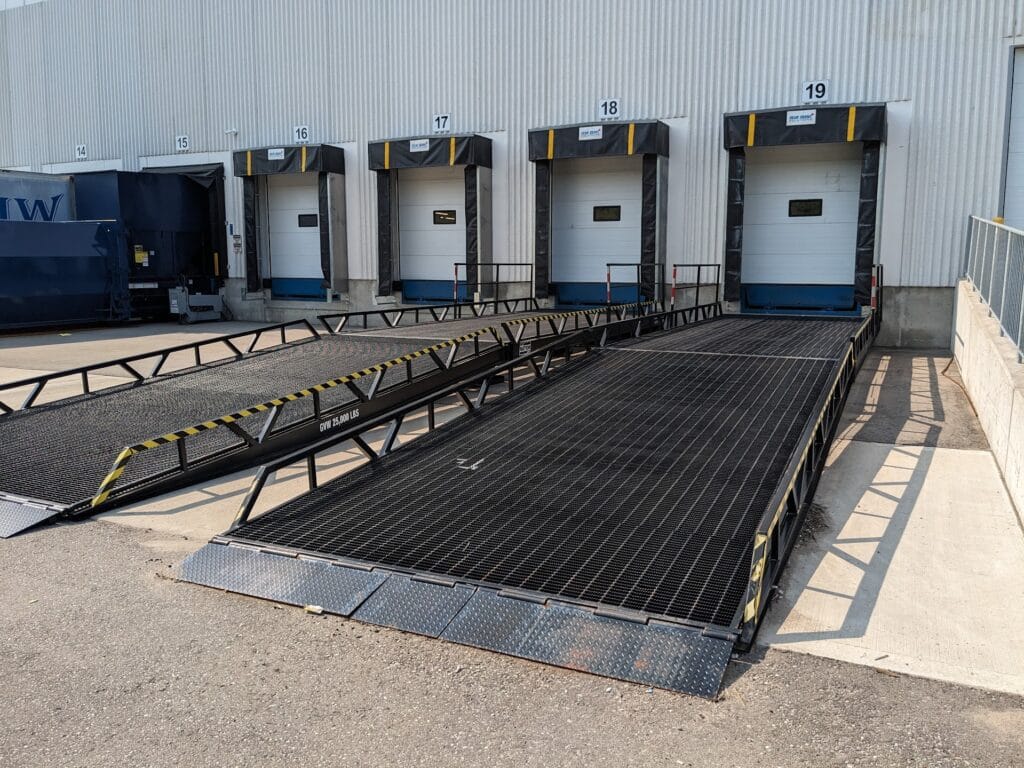
When planning an efficient and safe warehouse or loading facility, the loading dock ramp slope is one of the most important things to consider. The angle and design of a ramp directly influence how easily goods, vehicles, and equipment move between ground level and dock height.
A properly designed slope can reduce accidents, improve operational efficiency, and make the transfer of heavy materials much more manageable.
Choosing the right slope involves balancing safety, functionality, and compliance with industry standards to achieve smooth loading and unloading operations.
Understanding Ramp Slope and Its Importance
A loading dock ramp slope is measured by comparing the rise of the ramp to its length. This ratio is usually expressed as a percentage or a ratio, such as 1:12. The slope dictates how steep the ramp is, which directly affects the effort required to move equipment or vehicles.
A steeper ramp requires more force for manual handling and increases the risk of materials slipping or tipping.
Conversely, a slope that is too shallow may consume excessive space and limit warehouse layout flexibility. Recognizing the best slope for your operations can prevent accidents and improve workflow efficiency.
Factors That Influence Loading Dock Ramp Slope
Several factors affect the recommended loading dock ramp slope. First, the type of equipment used is important. Forklifts, pallet jacks, and hand trucks all have different capabilities in handling steep angles.
Second, the weight and size of the loads being moved will determine the ramp gradient that can safely support operations.
Third, environmental conditions such as rain, snow, or ice must be considered. Even a slightly steep ramp can become hazardous in wet conditions.
Fourth, accessibility requirements for workers who operate equipment manually also impact slope decisions. Balancing these variables makes for operational safety and efficiency.
Industry Guidelines for Ramp Slope
Industry standards suggest specific ratios for loading dock ramp slope to maintain safety and productivity. A common guideline is a slope ratio of 1:12, meaning for every inch of vertical rise, the ramp extends 12 inches horizontally.
This gradient is suitable for most warehouse equipment and personnel traffic.
Some scenarios, such as lightweight equipment or temporary ramps, allow for steeper slopes, up to 1:8. Knowing these recommendations is imperative for warehouse managers, construction professionals, and logistics planners when designing or retrofitting loading facilities.
Consulting guidelines helps reduce accidents and operational interruptions.
Choosing the Right Ramp Material
The material of a ramp influences the feasible loading dock ramp slope. Steel ramps offer high strength and durability for handling heavy machinery, while aluminum ramps are lighter and more portable.
Concrete ramps provide permanent solutions but require careful planning due to construction constraints.
Surface texture and grip are also important. Smooth surfaces can increase slippage risk, whereas textured or grated surfaces improve traction. Selecting the correct material impacts the slope design and helps guarantee that loads can be moved safely and efficiently between the dock and ground level.
Portable Loading Ramps: Flexibility and Safety
Portable loading ramps offer a versatile solution for businesses that need temporary or mobile access to docks. These ramps allow for adjustments in slope depending on the loading location and height requirements.
Their mobility means they can be relocated to different areas of a warehouse or used at multiple facilities.
The ability to modify the slope slightly helps accommodate equipment differences and improves safety during loading and unloading.
For companies that handle a large amount of cargo or need short-term solutions, portable ramps are a practical choice for maintaining operational efficiency without sacrificing safety.
Equipment Loading Ramps for Heavy Machinery
Operations that rely on forklifts or other motorized vehicles benefit from equipment loading ramps designed to support substantial weight. These ramps are engineered with stronger frameworks and reinforced surfaces to handle repeated use.
The slope must match the capabilities of the machinery to prevent accidents.
Excessive incline can strain engines or create tipping hazards, whereas a slope that is too gradual may require excessive space in the facility. Considering the specific equipment when designing or choosing a ramp helps maintain safe and productive loading operations.
Ground to Dock Ramps for Everyday Use
Ground-to-dock ramps connect vehicles and cargo to the dock level efficiently. They are ideal for distribution centers, manufacturing plants, and construction sites where materials move frequently. The slope of these ramps affects how quickly forklifts or pallet jacks can transition between heights.
Correct slope design reduces strain on operators and minimizes the likelihood of load damage. These ramps often require precise measurements of dock height and surrounding space to achieve an optimal gradient.
Planning the slope carefully contributes to operational safety and speed, reducing downtime during material handling.
Custom Loading Ramps for Unique Requirements
Certain facilities have unique layout or operational needs that require custom loading ramps. These ramps can be engineered to fit irregular dock heights, constrained spaces, or specialized equipment. A custom design considers slope, width, material, and surface texture to provide maximum efficiency.
Customized ramps also allow businesses to optimize warehouse layouts without compromising safety. Consulting with a professional ramp provider helps make certain the ramp meets operational requirements while maintaining safe gradients for personnel and machinery.
Custom solutions can solve complex loading challenges where standard ramps fall short.
Calculating the Ideal Ramp Slope
Calculating the correct loading dock ramp slope begins with measuring the vertical rise between the dock and ground level. Next, determine the horizontal distance available for the ramp. Dividing the rise by the horizontal run produces a ratio that indicates the slope.
Things like equipment type, load weight, and operational frequency should influence the final selection. Temporary ramps may allow for slightly steeper inclines, while permanent installations benefit from more gradual gradients.
Accurate slope calculation provides for smooth operations and reduces the risk of accidents during loading and unloading.
Safety Considerations for Ramp Slope
Safety is directly impacted by loading dock ramp slope. A steep ramp increases the chance of equipment tipping, losing control, or causing injuries.
Non-slip surfaces, side rails, and proper maintenance are instrumental for safety. For portable or temporary ramps, slope adjustments should match the capabilities of workers and vehicles.
Regular inspections and maintenance can prevent deterioration that alters the effective slope and compromises safety. Safety planning should be part of any ramp selection process, emphasizing both human and equipment factors in slope design.
Advantages of Adjustable Ramps
Adjustable ramps offer flexibility for businesses that handle different cargo sizes or dock heights. The ability to modify the slope allows operators to optimize the angle for different equipment and loads. Adjustable ramps reduce stress on personnel and machinery by maintaining appropriate gradients.
Portable ramps often include adjustable features, making them suitable for multiple facilities or temporary setups. These ramps combine the benefits of equipment loading ramps and portable loading ramps to offer adaptable solutions for complex logistics operations.
Maintenance Implications of Ramp Slope
The loading dock ramp slope affects the maintenance requirements of the ramp. Steeper ramps experience higher wear on surfaces and edges, particularly when used frequently by heavy machinery. Flat or slightly inclined ramps distribute weight more evenly and reduce stress on materials.
Proper maintenance extends ramp life, preserves traction, and maintains operational safety.
Materials should be chosen to resist deformation, corrosion, and abrasion, which can compromise slope performance over time. Proactive care helps maintain consistent slope performance for years of daily use.
Compliance and Industry Standards
Ramps must comply with local and national safety standards. Regulations often specify the maximum allowable slope for commercial ramps. Designing a loading dock ramp slope in compliance with these standards protects workers and reduces liability.
Facilities that follow recommended guidelines minimize the risk of accidents and maintain smooth logistics operations.
Consulting industry standards during the design process provides a benchmark for safety and performance. Compliance also demonstrates commitment to operational responsibility and worker protection.
Installation Considerations
The installation of a ramp requires careful planning of the loading dock ramp slope. Ground conditions, dock height, and surrounding space must all be evaluated. Temporary ramps can be installed quickly but may require additional supports to stabilize steeper slopes.
Permanent ramps involve more extensive construction but allow for precise slope customization. Selecting the proper slope during installation prevents costly modifications later and promotes long-term operational efficiency.
Planning installation with slope in mind reduces operational interruptions and improves daily workflow.
Optimizing Workflow Through Slope Selection
The efficiency of warehouse operations is influenced by the loading dock ramp slope. Gradual slopes allow forklifts and pallet jacks to move at consistent speeds without excessive strain. Rapid loading and unloading reduce wait times for trucks and improve facility throughput.
Facilities with variable cargo types benefit from adjustable or custom slopes that match operational demands. Optimizing slope selection is not only a safety consideration but also a productivity strategy, allowing businesses to maximize their logistical performance across multiple daily cycles.
Illustrative Examples Based on Typical Warehouse and Logistics for Successful Ramp Applications
Companies across North America have improved efficiency by selecting an appropriate loading dock ramp slope. Here are some possible examples:
- In our first scenario, let’s say a distribution center implemented custom ramps that fit tight spaces while maintaining safe gradients for heavy forklifts.
- Another facility could have adopted portable ramps for temporary loading, allowing flexibility in operations while keeping slope angles within recommended ranges.
These illustrations demonstrate that careful slope planning and ramp selection directly impact operational success, safety, and overall productivity in a number of industries.
Choosing the Right Ramp Provider
Selecting a professional provider is the secret to effective loading dock ramp slope implementation. Providers with experience in custom loading ramps and equipment loading ramps can advise on optimal slope angles for specific operations.
A knowledgeable team can recommend materials, surface textures, and slope modifications that improve safety and efficiency. Access to a wide range of portable loading ramps allows facilities to adapt quickly to changing operational needs.
Working with experts helps to make sure ramps meet both operational and safety requirements while supporting long-term productivity.
Nation Ramps’ Commitment to Slope Solutions
Nation Ramps knows that the right loading dock ramp slope transforms warehouse and facility operations. Our team designs ramps that account for equipment, load weight, and operational needs. We offer permanent, temporary, and custom solutions to accommodate every business requirement.
Our ramps meet North American safety standards, allowing businesses to move cargo efficiently and safely. We combine industry expertise with flexible solutions to deliver ramps that serve diverse industries across North America.
Our portable loading ramps, equipment loading ramps, ground to dock ramps, and custom loading ramps are built to last, with careful attention to slope and operational performance.
We are proud to support businesses in logistics, construction, warehousing, and transportation by designing ramps that optimize workflow and protect both operators and cargo.
If you have any questions about Nation Ramps, feel free to reach out to us today.
Frequently Asked Questions
What is the recommended slope for a loading dock ramp?
The recommended slope for a loading dock ramp generally falls between 10% and 15%, depending on the type of equipment and operational conditions. We typically advise targeting the lower end of this range whenever space allows, as gentler slopes improve traction, stability, and braking control for forklifts. A properly selected slope reduces the likelihood of tipping, load shifting, and excessive wear on equipment. Steeper slopes may be used in space-constrained environments, but they require careful consideration of load weight and operator experience. By aligning ramp slope with your specific operational needs, we help ensure safe, efficient, and consistent loading and unloading across a wide range of industrial applications.
How does the recommended ramp slope vary by application?
Ramp slope recommendations vary based on how the ramp will be used and the type of equipment involved. We typically design gentler slopes for heavy industrial applications or high-capacity forklifts to ensure stability and control under load. Lighter-duty operations or manual handling may allow for slightly steeper inclines, though safety remains a priority. Outdoor environments, where weather can affect traction, often require more conservative slopes compared to controlled indoor settings. Nation Ramps also considers factors such as frequency of use, surface conditions, and available space when determining the appropriate incline. Tailoring slope to the specific application ensures reliable performance while minimizing safety risks and operational strain.
Why is choosing the right loading dock ramp slope important for safety?
Selecting the correct ramp slope is critical to maintaining safe loading dock operations. We design slopes to ensure forklifts can maintain proper traction, balance, and braking control while moving loads. An incline that is too steep increases the risk of tipping, load shifting, and loss of control, particularly under heavy or uneven loads. It can also accelerate wear on equipment and increase operator fatigue. Conversely, an appropriately graded ramp supports smooth transitions, predictable movement, and reduced strain on machinery. By carefully matching slope to your equipment and operational environment, we help create a safer workspace that minimizes risk while supporting efficient and consistent material handling.
What is the maximum safe slope for a loading dock ramp?
The maximum safe slope for a loading dock ramp is generally considered to be around 15%, though the ideal limit depends on equipment type, load weight, and operating conditions. We recommend staying below this threshold whenever possible to maintain safe traction, stability, and braking performance. Steeper slopes can increase the risk of tipping, load shifting, and reduced control, especially when handling heavy or uneven loads. In tighter spaces where steeper inclines are unavoidable, additional safety measures such as enhanced traction surfaces and operator training become essential. By carefully evaluating your operational requirements, we help ensure the ramp slope supports both safety and efficiency without compromising performance.
How do I calculate the slope percentage of a loading dock ramp?
Calculating slope percentage involves comparing the vertical rise to the horizontal run of the ramp. We determine the slope by dividing the height difference between the ground and dock by the ramp length, then multiplying by 100. For example, a 1-meter rise over a 10-meter ramp results in a 10% slope. This calculation is essential for ensuring the incline remains within safe operating limits for forklifts and other equipment. We also account for real-world factors such as load weight, traction, and braking distance when applying this formula. Accurate slope calculation helps maintain safe, controlled movement while optimizing ramp performance and efficiency.
How does slope affect the required length of a loading dock ramp?
Slope and ramp length are directly related, with gentler slopes requiring longer ramps to achieve the same height. We use this relationship to design ramps that balance safety and space constraints. A lower slope improves traction, stability, and control, but increases the overall length needed for installation. Conversely, a steeper slope shortens the ramp but can introduce safety risks such as tipping or reduced braking efficiency. Nation Ramps evaluates your dock height, available space, and equipment requirements to determine the most effective combination. By aligning slope and length appropriately, we ensure your ramp supports safe, efficient, and consistent loading and unloading operations.
Are there regulatory or safety standards that influence ramp slope design?
Yes, ramp slope design is influenced by regulatory and safety standards to ensure safe operations. We follow guidelines from the Occupational Safety and Health Administration, which outline safe incline limits, load capacities, and proper operator practices. Local codes or industry-specific standards may also affect acceptable ramp angles. Compliance ensures operators can move loads safely without tipping or losing control, while equipment is protected from excessive stress. Incorporating these standards into ramp design helps reduce accidents, maintain consistent performance, and ensure legal compliance. By combining regulatory guidance with practical operational considerations, we create ramps that are both safe and efficient for your facility’s specific needs.
What slope should I use if I’m operating heavy forklifts or equipment?
When operating heavy forklifts or equipment, gentler slopes are essential to maintain stability, traction, and operator control. We generally recommend keeping ramp inclines toward the lower end of the 10–15% range, adjusting based on load weight, forklift type, and ramp surface conditions. Steeper ramps increase the risk of tipping, load shift, or equipment stress, particularly under maximum capacity. Additionally, ramp length and surface traction should be considered to ensure safe movement. By tailoring the slope to the specific demands of heavy equipment, we help maintain safety while supporting smooth, efficient loading and unloading operations, reducing strain on both operators and machinery.
Can loading dock slope recommendations differ in other regions or under other standards?
Yes, slope recommendations can vary depending on regional building codes, safety regulations, and industry standards. We take into account local guidelines, which may impose stricter or more lenient limits than the general 10–15% range. Factors such as climate, typical equipment types, and operational practices can influence these recommendations. Facilities in regions with snowy or wet conditions may require gentler slopes to maintain traction, while others may follow specific forklift manufacturer recommendations. By considering both regulatory requirements and environmental conditions, Our team at Nation Ramps ensures that ramps are safe, compliant, and effective for your specific location and operational needs, minimizing risk and optimizing performance.
What slope range should portable ramps have compared to stationary ramps?
Portable ramps typically require a gentler slope than stationary ramps to ensure stability during movement and repositioning. We generally recommend a slope range of 8–12% for portable ramps, allowing forklifts to operate safely while accommodating variable trailer or dock heights. Stationary ramps, being fixed and reinforced, can safely support slightly steeper slopes, usually up to 12–15%, depending on load weight and equipment type. Proper slope selection affects traction, braking, and overall safety for both ramp types. By carefully matching slope to ramp type, we help maintain efficient loading and unloading operations while minimizing risk to operators, equipment, and cargo, ensuring safe performance under all conditions.